Throwing of Hand Grenades
Since few Soldiers throw in the same manner, it is difficult to establish
firm rules or techniques for throwing hand grenades. How accurately they are
thrown is more important than how they are thrown. If a soldier can achieve more
distance and accuracy using his own personal style, he should be allowed to do
so as long as his body is facing sideways, towards the enemy’s position, and he
throws basically overhand. There is, however, a recommended method of throwing
hand grenades.
- Employ Grenades. Use the following procedures:
- Observe the target to mentally establish the distance between the
throwing position and the target area. In observing the target, minimize
exposure time to the enemy (no more than 3 seconds). - Grip the hand grenade in the throwing hand.
- Grasp the pull ring with the index or middle finger of the nonthrowing
hand. Remove the safety pin with a pulling and twisting motion. If the
tactical situation permits, observe the safety pin’s removal. - Look at the target and throw the grenade using the overhand method so
that the grenade arcs, landing on or near the target. - Allow the motion of the throwing arm to continue naturally once the
grenade is released. This follow-through improves distance and accuracy and
lessens the strain on the throwing arm. - Practice the necessary throws that are used in combat, such as the
underhand and sidearm throws. Soldiers can practice these throws with
practice grenades, but they must throw live fragmentation grenades overhand
in a training environment.
- Observe the target to mentally establish the distance between the
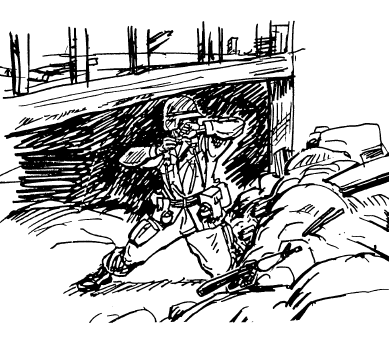
- Throwing Positions. In training, throwing positions are used for
uniformity and control, and to familiarize Soldiers with the proper manner of
throwing grenades in combat if the situation allows a choice. Consider the
following throwing positions when employing grenades:- Standing. The standing position is the most desirable and natural
position from which to throw grenades. It allows the Soldier to obtain the
greatest possible throwing distance. Soldiers normally use this position
when occupying a fighting position or during operations in fortified
positions or urban terrain. Use the following procedures when throwing from
this position:- Observe the target to mentally estimate the range. Use the proper
handgrip, and arm the grenade while behind cover. - Assume a natural stance with the weight balanced equally on both feet.
Hold the grenade shoulder high and hold the nonthrowing hand at a
45-degree angle with the fingers and thumb extended, joined, and pointing
toward the intended target. - Throw the grenade with a natural motion, using the procedures
described in paragraph A. - Seek cover to avoid being hit by fragments or direct enemy fire. If no
cover is available, drop to the prone position facing the direction of the
grenade’s detonation.
- Observe the target to mentally estimate the range. Use the proper
- Standing. The standing position is the most desirable and natural
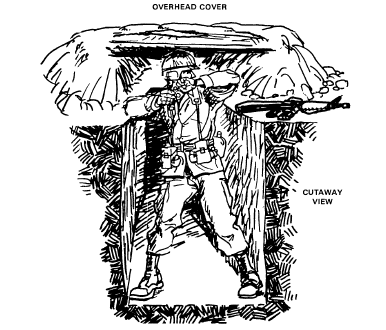
Standing Throwing Position
Prone-To-Standing. The prone-to-standing position
allows the soldier to throw the grenade for a greater distance than the
alternate prone but he is exposed more. It is important to minimize the
exposure time and to have covering fire suppress the target and other enemy
positions that can hit the thrower.
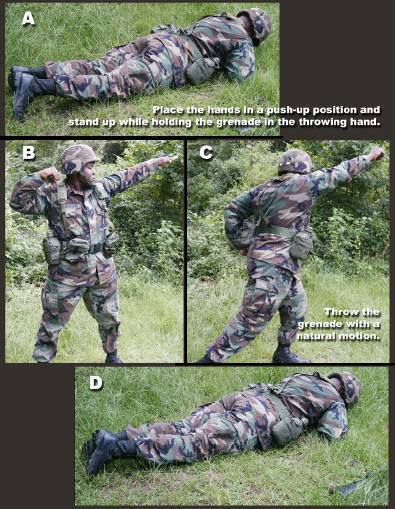
Lie down on the stomach with the body parallel to the
grenade’s intended line of flight. Hold the grenade at chest level.Place the hands in a push-up position and stand up while
holding the grenade in the throwing hand.Assume a natural stance with the weight balanced equally
on both feet. Hold the grenade shoulder high and hold the nonthrowing hand
at a 45-degree angle with the fingers and thumb extended, joined, and
pointing toward the intended target. Try to assume a good standing
position-the throw will be longer and more accurate-but it is more
important to quickly get up and prepare the grenade.Throw the grenade with a natural motion.
After throwing the grenade, drop to the ground on the
stomach and press flat against the ground.
Prone to Standing Throwing Position
Kneeling. The kneeling position reduces the distance
a Soldier can throw a grenade. It is used primarily when a Soldier has only
a low wall, a shallow ditch, or similar cover to protect him. Use the
following procedures when throwing from this position:
Observe the target to mentally estimate the throwing
distance. Using the proper grip, arm the grenade while behind cover.Hold the grenade shoulder high and bend the nonthrowing
knee at a 90-degree angle, placing that knee on the ground. Keep the
throwing leg straight and locked with the side of the boot firmly on the
ground. Move the body to face sideways toward the target position. Keep
the nonthrowing hand at a 45-degree angle with the fingers and thumb
extended, joined, and pointing toward the enemy position.Throw the grenade with a natural throwing motion. Push off
with the throwing foot to give added force to the throw. Follow through
with the throwing arm as described in paragraph A-5.Drop to the prone position or behind available cover to
reduce exposure to fragmentation and direct enemy fire.
Kneeling Throwing Position
Prone-To-Kneeling. The kneeling position can also be used
when the Soldier is in the open. The prone-to-kneeling position allows the
soldier to throw the grenade farther than the alternate prone, but he is
exposed more. It is important to minimize the exposure time and to have
covering fire suppress the target and other enemy positions that can hit the
thrower.
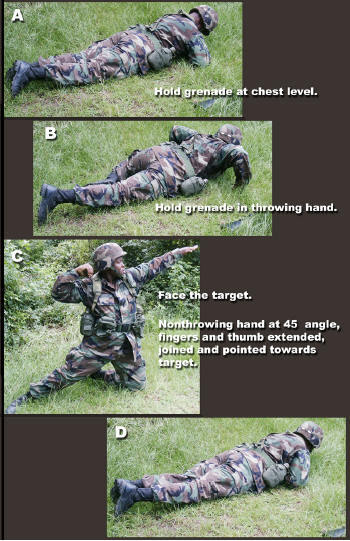
Lie down on the stomach with the body parallel to the
grenade’s intended line of flight. Hold the grenade at chest level.Place the hands in a push-up position and assume the
kneeling position while holding the grenade in the throwing hand.Hold the grenade shoulder high and bend the nonthrowing
knee at a 90-degree angle, placing that knee on the ground. Keep the
throwing leg straight and locked, with the side of the boot firmly on the
ground. Move the body to face sideways toward the target position. Keep
the nonthrowing hand at a 45-degree angle with the fingers and thumb
extended, joined, and pointing toward the enemy position. Try to assume a
good kneeling position-the throw will be longer and more accurate-but
quickly getting up and preparing the grenade is more important.After throwing the grenade, drop to the ground on the
stomach and press flat against the ground
Prone to Kneeling Throwing Position
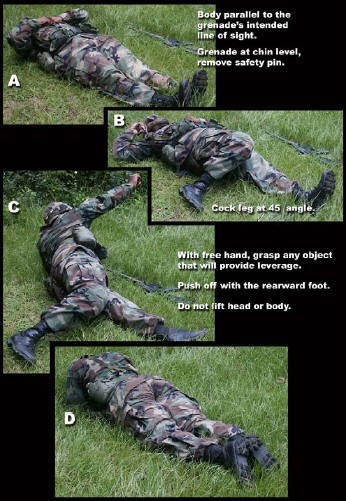
An alternate prone position reduces both distance and
accuracy and is used only when an individual is pinned down by hostile fire
and is unable to rise to engage his target. Use the following procedures
when throwing from the alternate prone position:
Lie down on the back with the body parallel to the
grenade’s intended line of flight. Hold the grenade at chin-chest level
and remove the safety pins.Cock the throwing leg at a 45-degree angle, maintaining
knee-to-knee contact and bracing the side of the boot firmly on the
ground. Hold the grenade 4 to 6 inches behind the ear with the arm cocked
for throwing.With the free hand, grasp any object that will provide
added leverage to increase the throwing distance. In throwing the grenade,
push off with the rearward foot to give added force to the throw. Do not
lift the head or body when attempting to throw the grenade as this causes
exposure to direct enemy fire.After throwing the grenade, roll over onto the stomach and
press flat against the ground
Alternate Prone Throwing Position