Check and Treat for Shock
Causes and Effects
a. Shock may be caused by severe or minor trauma to the body. It usually is the result of–
- Significant loss of blood.
- Heart failure.
- Dehydration.
- Severe and painful blows to the body.
- Severe burns of the body.
- Severe wound infections.
- Severe allergic reactions to drugs, foods, insect stings, and snakebites.
b. Shock stuns and weakens the body. When the normal blood flow in the body is upset, death can result. Early identification and proper treatment may save the casualty’s life.
c. See FM 8-230 for further information and details on specific types of shock and treatment.
Signs/Symptoms
Examine the casualty to see if he has any of the following signs/symptoms:
- Sweaty but cool skin (clammy skin).
- Paleness of skin.
- Restlessness, nervousness.
- Thirst.
- Loss of blood (bleeding).
- Confusion (or loss of awareness).
- Faster-than-normal breathing rate.
- Blotchy or bluish skin (especially around the mouth and lips).
- Nausea and/or vomiting.
Treatment/Prevention
In the field, the procedures to treat shock are identical to procedures that would be performed to prevent shock. When treating a casualty, assume that shock is present or will occur shortly. By waiting until actual signs/symptoms of shock are noticeable, the rescuer may jeopardize the casualty’s life.
a. Position the Casualty. (DO NOT move the casualty or his limbs if suspected fractures have not been splinted.)
(1) Move the casualty to cover, if cover is available and the situation permits.
(2) Lay the casualty on his back.
NOTE: A casualty in shock after suffering a heart attack, chest wound, or breathing difficulty, may breathe easier in a sitting position. If this is the case, allow him to sit upright, but monitor carefully in case his condition worsens.
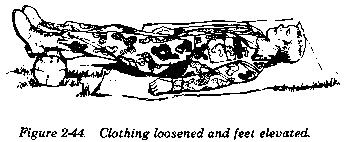
(3) Elevate the casualty’s feet higher than the level of his heart. Use a stable object (a box, field pack, or rolled up clothing) so that his feet will not slip off (Figure 2-44).
WARNING: DO NOT elevate legs if the casualty has an unsplinted broken leg, head injury, or abdominal injury.
WARNING: Check casualty for leg fracture(s) and splint, if necessary, before elevating his feet. For a casualty with an abdominal wound, place knees in an upright (flexed) position.
(4) Loosen clothing at the neck, waist, or wherever it may be binding.
CAUTION: DO NOT LOOSEN OR REMOVE protective clothing in a chemical environment.
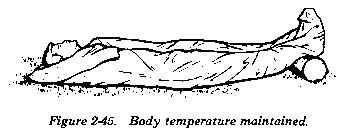
(5) Prevent chilling or overheating. The key is to maintain body temperature. In cold weather, place a blanket or other like item over him to keep him warm and under him to prevent chilling (Figure 2-45). However, if a tourniquet has been applied, leave it exposed (if possible). In hot weather, place the casualty in the shade and avoid excessive covering.
(6) Calm the casualty. Throughout the entire procedure of treating and caring for a casualty, the rescuer should reassure the casualty and keep him calm. This can be done by being authoritative (taking charge) and by showing self-confidence. Assure the casualty that you are there to help him.
(7) Seek medical aid.
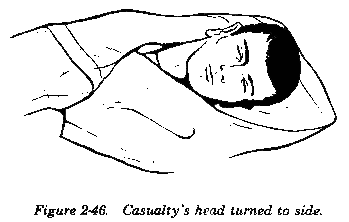
b. Food and/or Drink. During the treatment/prevention of shock, DO NOT give the casualty any food or drink. If you must leave the casualty or if he is unconscious, turn his head to the side to prevent him from choking should he vomit (Figure 2-46).
c. Evaluate Casualty. If necessary, continue with the casualty’s evaluation.